
Parenting and Family
Agile and Scrum FundamentalsMaster Change, Deliver Excellence
15 lessons · 3 hours · 0.3 ceus
 Close
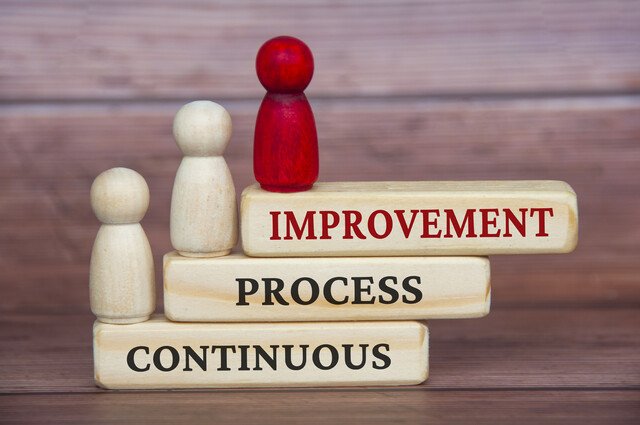
Unleash Continuous Improvement, One Step at a Time
12 lessons · 5 hours · 0.5 ceus
Let your curiosity lead.Unlocking Excellence: The Kaizen Way to Business Success and Personal Growth
In the heart of Japan lies a powerful philosophy that's woven into the fabric of its culture, a transformative concept called 'Kaizen' - the art and science of continuous improvement. While the mystique of Kaizen has been intrinsic to Japanese development for years, it's only begun to sparkle on the global stage, captivating Western minds and methodologies.
But what makes Kaizen such a game-changer?
Peel back the layers, and you'll see that at its core, Kaizen isn't just about business processes-it's a philosophy of life. It's the difference between stagnation and evolution, between resting on laurels and constantly striving for excellence. It's the engine behind industry giants such as Toyota, Apple, Google, and Microsoft, as well as the secret sauce of numerous high-flying celebrities and athletes who have scaled the summits of their respective fields.
Dive Deep into the World of Kaizen with Our Course:
->
Foundational Knowledge: Immerse yourself in the origins, principles, and transformative power of Kaizen. Understand why it's more than just a business tool-it's a way of life.
Comprehensive Tool Review: Familiarize yourself with the wide array of Kaizen tools and techniques. Learn the art of selecting, adopting, and harmonizing them within your unique business environment.
Management Perspective: Equip yourself or your management team with a deep, nuanced understanding of Kaizen's potential. Make decisions rooted in insight, ensuring Kaizen becomes an integral part of your organizational DNA.
Customization Strategies: Every business is unique. Identify which Kaizen tools align best with your company's ethos and goals. Learn how to foster a cultural shift that ensures a seamless and impactful Kaizen integration.
Engaging Learning Experience: Beyond mere theory, our course is infused with high-definition videos, vivid charts, insightful graphs, and compelling quotes from Kaizen luminaries. Real-life case studies bring the concepts alive, ensuring the lessons are not just learned, but lived.
In a rapidly changing world, the only constant is change. Embracing Kaizen isn't just about staying relevant-it's about leading the charge, setting industry standards, and crafting a legacy of excellence. Whether you're an individual eager for personal growth or a business seeking a competitive edge, this course is your gateway to a brighter, more prosperous future.
Don't be left behind. Dive into the riveting world of Kaizen, and watch as continuous improvement becomes your second nature. Join us, and let's embark on this transformative journey together!
12 lessons · 5 hours · 0.5 ceus
Kaizen contrasts the conventional mindset by focusing on process improvements rather than individual errors, usually achieved through teamwork and cultivating a culture open to change. This approach not only boosts organizational performance but also emphasizes the importance of gradual development in personal lives, advocating the motto: 'You are what you make yourself.'
Kaizen emphasizes ongoing improvement through practical, small changes that engage all levels of workers and management, distinct from Western ideas of radical change. Its key methodologies include Gemba walks for real-time observation, Kaizen Blitz workshops for rapid problem-solving, and Mini Kaizen for empowering individual employee innovation.
Effective Kaizen leadership involves daily improvements, placing customer satisfaction at the forefront, and prioritizing quality over profit. Leaders must create a culture where problem-solving is collaborative and cross-functional, fostering an environment that continuously seeks to add value.
A Kaizen event is a collaborative effort aimed at optimizing business processes through waste reduction and value enhancement by engaging all stakeholders in the continuous improvement process. It fosters innovation and rapid solutions while requiring commitment across the organization for successful implementation.
Lesson Summary 5: The scientific methodology of Six Sigma is ideal for developing and refining hypotheses about organizational operations, enabling effective problem-solving through rigorous analysis and control measures. Unlike Six Sigma's analytical focus, Kaizen's broad vision promotes collective insights for gradual yet constant improvement in company processes and employee roles.
Teamwork in Kaizen mirrors sports dynamics, where the collective effort leads to achieving goals; quality circles empower employees to refine processes, fostering a sense of belonging and active involvement. Automation aids continuous improvement by streamlining tasks, yet it's most effective when combined with other Kaizen strategies.
Kaizen's essence lies in visual management, JIT, and 5S, driving a clean, efficient workplace through continuous improvement and waste elimination.
Kaizen's success relies on a structured hierarchy involving diverse roles like steering committees, managers, and action teams, ensuring efficient information flow and task delegation. This framework supports continuous improvement by harnessing expertise from external consultants and coaches, fostering a culture of skill enhancement and problem-solving.
Walter A. Shewart and Edward W. Deming developed the PDCA Cycle as a method for implementing continuous improvement within organizations by emphasizing planning, testing, reviewing, and standardizing processes. This iterative process involves data collection, stakeholder engagement, and systematic problem-solving techniques like brainstorming and root cause analysis.
Kaizen focuses on continuous improvement, demanding a change in mindset to view existing processes as improvable and never set in stone. Successful implementation relies on fostering a culture emphasizing process improvements, job satisfaction, teamwork, and a commitment to customer-centric strategies.
Cause and Effect diagrams, also known as Ishikawa diagrams, systematically link potential causes to specific effects. This visual tool aids in brainstorming and organizing ideas to identify root causes of quality issues.
Kaizen and target-costing methods share a focus on achieving target costs but differ in application, where Kaizen stresses perpetual production process improvements for profitability. Empowering multidisciplinary teams and fostering communication facilitate the expansive adoption of Kaizen practices beyond traditional, compartmentalized approaches.
More ideas connected to your curiosity.
Master Change, Deliver Excellence
15 lessons · 3 hours · 0.3 ceus
Master Efficiency, Lead with Confidence
15 lessons · 4 hours · 0.4 ceus
Embrace Change, Master Adaptation
15 lessons · 3 hours · 0.3 ceus
Unlock Insights, Empower Decisions
15 lessons · 6 hours · 0.6 ceus
Unlock Your Potential: Master the Art of Strategic Thinking
15 lessons · 6 hours · 0.6 ceus