
Spiritual Studies
Civic Education and EngagementEmpower Tomorrow's Citizens Today
15 lessons · 7 hours · 0.7 ceus
 Close
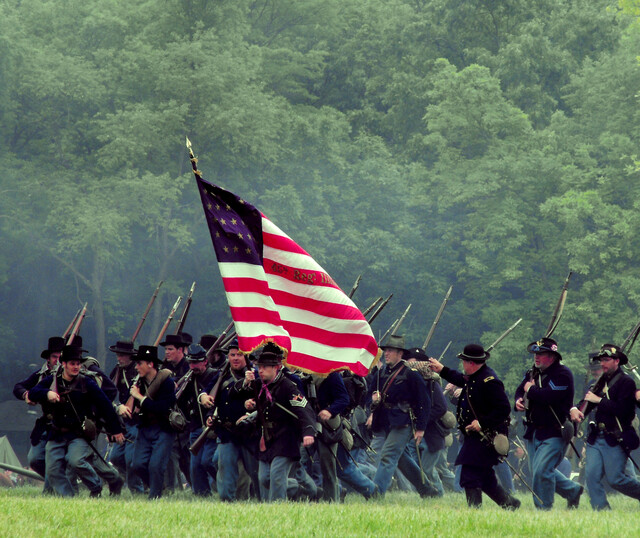
Dive Deep into History: Unravel the American Civil War
12 lessons · 13 hours · 1.3 ceus
Let your curiosity lead.Understanding the American Civil War
The American Civil War, often referred to as the War Between the States, stands as a testament to a time when a burgeoning nation's ideals, values, and very identity were deeply contested. This was not merely a clash of armies, but a profound struggle of ideologies, where family members found themselves on opposing sides, fueled by convictions and beliefs deeply rooted in the cultural, political, and economic fabric of the nation.
The United States, a young republic carved out from the ideals of liberty and democracy, found itself on the brink of dissolution. Key issues included the fierce debate over states' rights versus federal authority, the ethical, economic, and political facets of slavery, and ultimately, the overarching question of the Union's preservation.
Statistics paint a haunting picture of the Civil War's devastation: more American lives were lost in this conflict than in any other war before or since. The weight of its significance extends beyond numbers, as it sowed seeds of sentiments and beliefs that continue to resonate in American discourse today. For instance, the resonance of the Civil War can be felt in contemporary discussions on federal vs. state authority, racial equity, and regional identities.
This comprehensive course endeavors to provide an in-depth exploration into the pivotal moments, battles, and figures of the Civil War. We will traverse the timeline, uncovering the intricate web of political and social factors that culminated in this colossal conflict.
Lesson 1. Civil War Terminology and Course Structure
-> Dive into the essential vocabulary and overarching framework of the course to set a solid foundation for the subsequent modules.
Lesson 2. Setting The Stage: America's Path to Civil War
-> Delve into the events and sentiments leading up to the war, exploring the multifaceted causes that set the nation on this tumultuous path.
Lesson 3. The War Begins
-> An intricate look into the first salvos of the war, exploring the initial strategies and conflicts that set the tone for the battles ahead.
Lesson 4. The War Goes West
-> Understand the strategic importance of the Western Theater and how it played a pivotal role in shaping the war's progression.
Lesson 5. Escalation of Battles, 1862
-> A focused study on the major battles of this year, their significance, and their implications on the broader conflict.
Lesson 6. Battles of 1862, Continued
-> Continuing our deep dive into the crucial battles of 1862 and their reverberating impacts.
Lesson 7. The Decisive Battles of 1863-64, Battle of Chancellorsville
-> Dissect the strategies, outcomes, and broader ramifications of this seminal battle in the war's narrative.
Lesson 8. The Decisive Battles of 1863-64, Battle of Gettysburg
-> Uncover the intricacies of this turning point in the Civil War, its heroes, its strategies, and its enduring significance.
Lesson 9. The Decisive Battles of 1863-64, Battle of Vicksburg
-> Delve into the siege and eventual capture of Vicksburg, and its strategic importance in dividing the Confederacy.
Lesson 10. The End of the War
-> As the tides of war shift, explore the concluding chapters of the Civil War, understanding the paths to peace and the eventual reunification of the Union.
Lesson 11. Notable Figures of the American Civil War
-> Shine a spotlight on the men and women, both renowned and lesser-known, whose actions, decisions, and convictions shaped the course of the war.
Lesson 12. Summary of the Civil War
-> A holistic recapitulation of the Civil War, synthesizing the key takeaways and drawing connections to the present day.
Join us on this enlightening journey, as we navigate the profound depths of the American Civil War, a defining chapter in the annals of the United States. Through this course, students will gain a nuanced understanding, fostering a deeper appreciation for the complex tapestry of American history. Whether you're a history enthusiast, a scholar, or simply curious, this course promises a transformative experience.
12 lessons · 13 hours · 1.3 ceus
Medical practices during the Civil War saw innovations out of necessity, with the North developing advanced hospital networks and introducing tools like chloroform for anesthesia. Meanwhile, rife rifled muskets and the Minie Ball transformed warfare, prompting tactical shifts towards trench warfare.
From Lincoln’s balanced yet resolute Union-saving approach to the Southern commitment to slavery as an economic necessity, the path to the Civil War was marked by irreconcilable regional differences over governance, slavery, and modernization. The economic boom of the South fueled by slavery contrasted sharply with the industrial North’s moral and practical opposition to the practice.
The Civil War's onset in 1861 was marked by fierce political and military maneuvers, culminating in South Carolina's secession and the Confederate bombardment of Fort Sumter. Despite initial Union setbacks, including the First Battle of Bull Run, efforts to reunite the nation persisted amidst heavy casualties and strategic mishaps.
The Civil War's Westward expansion in 1861 saw Union forces clashing with Southern sympathizers in Missouri, Arkansas, and other states. Key battles like Wilson's Creek shaped the shifting allegiances and military strategies in the region.
Lesson Summary 4: The neutrality of key border states was contested, leading to significant military campaigns and strategic battles at Fort Donelson and Pea Ridge. Diplomatically, the Union’s effort to maintain European non-interference weakened the Confederacy’s international position.
At the Battle of Fredericksburg, General Burnside's poorly executed attacks led to a devastating Union defeat against well-entrenched Confederate forces, significantly boosting Southern morale. This lopsided battle revealed the critical impact of strategic ground advantage and command decisions in Civil War battles.
Outnumbered and resource-poor, the Confederacy relied on Lee's brilliant strategies to counter the Union's massive Army of the Potomac at Chancellorsville, achieving an improbable victory but at a heavy cost.
Gettysburg, the Civil War's bloodiest confrontation, saw Confederate forces falter due to leadership missteps and Union tenacity, forever altering the war's trajectory. This significant clash, deeply etched in national consciousness, is celebrated through continued remembrance and the enduring power of Lincoln's address.
Sherman's campaign through Georgia epitomized the harsh realities of total warfare; his troops left devastation in their wake, targeting both military and civilian resources. The campaign's relentless nature significantly fueled Southern resentment yet strategically weakened Confederate resistance.
As the Civil War drew to a close with Lee's surrender at Appomattox, President Lincoln faced tragedy on April 14, 1865, when John Wilkes Booth assassinated him at Ford's Theatre. The assassination was part of a broader plot to destabilize the Union government, but it ultimately failed as co-conspirators were captured and justice served.
Both Confederate and Union forces boasted remarkable leaders like George Pickett and Joshua Chamberlain, whose actions at key battles like Gettysburg remain legendary. These figures, with diverse backgrounds and strategies, highlight the complex human elements behind the war's progression and ultimate resolution.
The lesson concludes with a sobering chart illustrating the immense casualties, prompting contemplation about the sustainability of the North-South conflict. Supplementary resources are provided for deeper exploration of untaught dimensions of the Civil War.
More ideas connected to your curiosity.
Empower Tomorrow's Citizens Today
15 lessons · 7 hours · 0.7 ceus
Empower Change: Mastering Bias Reduction
15 lessons · 5 hours · 0.5 ceus
Unlock the Past to Innovate the Future of Learning
15 lessons · 3 hours · 0.3 ceus
Shaping Tomorrow's Schools, Today
15 lessons · 3 hours · 0.3 ceus
Navigate Tomorrow's Challenges with Cultural Insight
15 lessons · 4 hours · 0.4 ceus