
Leadership and Management
Esoteric Traditions and Ancient WisdomUnlock the Mysteries, Embrace the Wisdom
15 lessons · 4 hours · 0.4 ceus
 Close
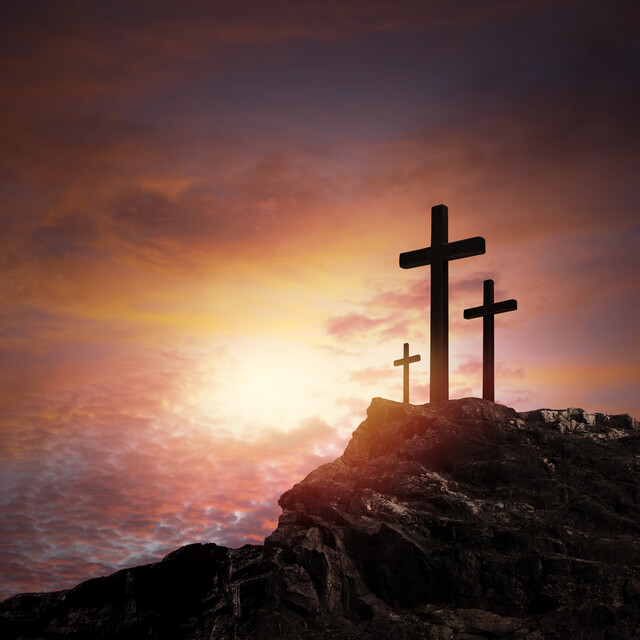
Deepen Your Faith, Discover the Foundations
13 lessons · 8 hours · 0.8 ceus
Let your curiosity lead.Delving into Christianity: A Comprehensive Guide to the World's Largest Faith
Step into the fascinating realm of Christianity, the religion that commands the spiritual allegiance of billions globally. While recent surveys suggest that about 65% of Americans identify as Christians, the faith itself is vast, intricate, and rooted in deep traditions that span the globe.
Christianity's colossal canvas boasts a myriad of denominations, with the Roman Catholic Church leading the charge, boasting over a billion adherents. The Protestant tradition follows, accounting for approximately 500 million believers, and the Eastern Orthodox Church serves as a spiritual home for approximately 225 million souls.
Despite these numbers, many Christians transcend denominational boundaries, making it likely that Christianity's actual footprint is even more extensive than projected. Central to this faith is the reverence for Jesus Christ, heralded as the Messiah, whose life and teachings, as documented in the New Testament, have offered solace, guidance, and purpose to countless souls across millennia.
This course navigates the rich tapestry of Christian thought and tradition without favoring any specific branch. Instead, it presents a panoramic view, offering insights into the core tenets and doctrines of the most influential Christian sects: Roman Catholic, Eastern Orthodox, and Protestant. Given that Christianity boasts a staggering 38,000 denominations, this course wisely narrows its focus to provide a coherent and enlightening experience, without compromising depth or authenticity.
Spanning seventeen meticulously crafted lessons, this course is your passport to an engaging, enlightening journey. Each lesson concludes with a suite of summary review questions and exercises, meticulously designed to reinforce your understanding and mastery of the material. This structured approach ensures a wholesome learning experience, allowing participants to gauge their progress and solidify their understanding.
Whether driven by personal faith, academic curiosity, or an earnest desire to understand the teachings of Christ and the global religion they inspired, this course promises a lucid, comprehensive introduction to Christianity's foundational concepts.
A key companion in this journey is the Bible. While digital versions abound, participants are encouraged to secure a hard copy of the King James Version of the Holy Bible. The tangible experience of flipping through its pages, annotating, and highlighting passages can be profoundly immersive. Affordable copies are widely available online, or you might borrow one from a library or a loved one. However, owning a personal copy is invaluable, serving as a lifelong reference and spiritual companion.
Join us on this enlightening journey and immerse yourself in the timeless teachings and traditions of Christianity.
*Note: The Roman Catholic and Eastern Orthodox Churches view themselves not as mere 'denominations' but assert their identity as 'The One True Church,' anchored in the Confession of Peter and established by Jesus Christ Himself.
13 lessons · 8 hours · 0.8 ceus
Christianity's foundation rests on the Doctrine of Redemption, allowing believers to attain salvation by acknowledging Jesus Christ as divine. Through traditions and prayers, Christians seek to emulate divine forgiveness, fostering a global community of faith and reconciliation.
The Bible, composed of the Old and New Testaments, is a foundational text for Christianity, recording events and teachings before, during, and after Jesus Christ's life. While initially daunting, with the help of Bible companions and familiarity with historical context and language, readers can discern its rich and profound insights.
Christianity, borne out of the words and acts of Jesus Christ and His apostles, extends beyond its biblical beginnings to encompass profound ecclesiastical evolutions and schisms, distinguishing it over time. Fundamental Christian milestones such as Christ's nativity and resurrection were pivotal in establishing Christianity's core beliefs, eventually facing splits like the Great Schism and fostering various branches such as Protestantism.
The resurrection of Christ is vital in Christianity as it fulfills Old Testament prophecies and presents Jesus as the savior, whose resurrection offers redemption from sin. This doctrine is central as it emphasizes the belief in eternal life and reconciliation with God through Christ's sacrifice.
Peter was seen as the rock upon which Jesus would build his church, leading early Jewish Christians who incorporated the Tenakh and assumed Jesus's acceptance by all Jews. Despite differences, Catholic, Orthodox, and Protestant churches share some foundational practices like baptism and communion.
Confirmation, following First Holy Communion, acts as an initiation into mature faith, requiring study and understanding before participants officially reaffirm their commitment to Christian beliefs. Matrimony and Holy Orders are sacraments that confer particular roles and responsibilities, underscoring the communal and sacred dimensions of life choices within the faith.
As churches embrace more casual and media-savvy approaches, they aim to attract diverse congregations by being more relevant to modern lives. The focus is on contemporary applicability of teachings, fostering acceptance and reducing judgment.
Christmas, celebrated on December 25th, honors the birth of Christ through festive traditions and religious services, despite concerns over commercialization. The Lenten season, beginning on Ash Wednesday, encourages sacrifice and reflection, leading to the celebrations of Christ's resurrection on Easter Sunday.
Through a curated exploration of Christian leaders, this lesson reveals how personal faith can intersect with and drive monumental social reform. Figures ranging from Saint Patrick to Billy Graham demonstrate the varied ways in which devotion to Christian principles has shaped both history and contemporary society.
Respectful understanding of Christianity, Hinduism, Judaism, Buddhism, and Islam reveals shared values like love and peace amidst distinct religious truths, warding off ignorance-induced strife. The lesson illustrates how these similarities foster spiritual growth and interfaith harmony.
Central to both art and theology, angels are structured in a tri-spherical celestial hierarchy, serving roles from direct divine service to earthly guardianship. Notable archangels, including Gabriel and Michael, exemplify these roles through their specific divine missions and protections over humanity.
Peter, deemed the 'rock,' was a key leader among the apostles, witnessing many miracles alongside James and John. Meanwhile, Andrew introduced his brother Peter to Jesus, underscoring the interconnectedness among the apostles.
Joining a church can provide fellowship and insight into Christianity, yet learning directly from the Bible is crucial. The emphasis in Christianity is on loving God with all one's being and extending that love to others.
More ideas connected to your curiosity.
Unlock the Mysteries, Embrace the Wisdom
15 lessons · 4 hours · 0.4 ceus
Transform Ancient Secrets into Modern Enlightenment
15 lessons · 5 hours · 0.5 ceus
Unlock Ancient Wisdom: Journey into Nature's Mystical Secrets
15 lessons · 6 hours · 0.6 ceus
Unlock Your Inner Light, Embrace Transformation
15 lessons · 7 hours · 0.7 ceus
Navigate Tomorrow's Challenges with Cultural Insight
15 lessons · 4 hours · 0.4 ceus