
Personal Development
Advanced Writing and Editing SkillsMaster the Pen, Transform Your Prose
15 lessons · 5 hours · 0.5 ceus
 Close
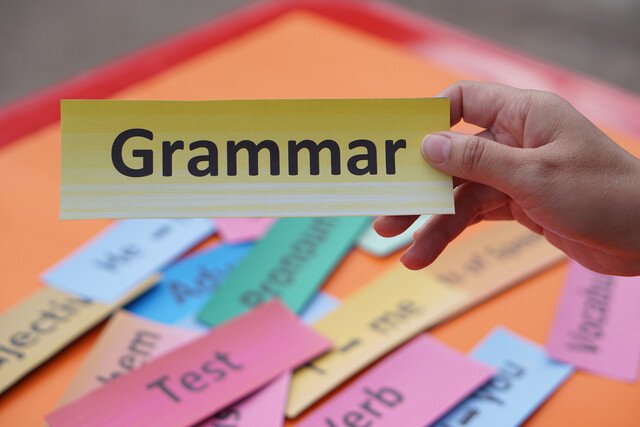
Elevate Your English: Master the Nuances with Ease!
15 lessons · 9 hours · 0.9 ceus
Let your curiosity lead.Are you ready to deepen your understanding of English grammar and elevate your communication skills? Welcome to English Grammar Level 2, designed for those who've mastered the basics but wish to refine their linguistic prowess. Imagine writing with clarity that resonates and speaking with confidence in any professional setting. This course will guide you through the complexities of sentence structure, from subjects and predicates to the nuanced use of verb tenses and irregular verbs.
You'll explore the backbone of language with nouns and pronouns, enhancing your ability to construct complex sentences with ease. Delve into the artistry of punctuation, learning how a strategic comma or well-placed semicolon can transform your writing. Each lesson provides tangible skills that improve clarity and enhance meaning. If precision in communication is your goal, start here and watch your expertise grow. Join us to transform the way you express ideas--clearly and effectively!
15 lessons · 9 hours · 0.9 ceus
Mastery of grammar and punctuation is presumed as students progress, yet these elements are vital for creating clear communication. A single punctuation mark can drastically change a sentence's meaning, reflecting the importance of these skills in professional settings.
Delving into the intricacies of the subject and predicate, this lesson demystifies fundamental and advanced sentence structures. Through plentiful examples and detailed explanations, learners gain insights into effective written and spoken communication.
Nouns and pronouns form the backbone of language, defining subjects and enabling fluid communication through substitution. Mastering their advanced uses, like compound structures and pronoun-antecedent agreement, enhances clarity and understanding in complex sentences.
Advanced verb tense exploration involves tense consistency, sequence, and combining mixed tenses for nuanced expression. This depth helps accurately convey complex linguistic contexts and temporal relationships.
Irregular verbs hold unique forms that are essential for mastering English, often leading to errors such as 'drived' instead of 'drove.' By examining their usage in various tenses and exploring their rich historical backgrounds, learners can grasp their intricate patterns.
The lesson covers adjectives used before nouns or after verbs for descriptive detail, and adverbs modifying verbs or adjectives with precision. Exercises emphasize forming correct comparisons and understanding irregular forms, propelling learners towards linguistic proficiency.
Participial phrases serve as adjectives and are formed with participles, providing descriptive embellishments to nouns. Examples include 'singing loudly' in 'The girl singing loudly is my cousin,' offering additional context and detail.
Advanced clause types, like conditional, cleft, and elliptical clauses, enhance emphasis, contrast, and economy of language in expression. Insight into nested and discontinuous clauses opens avenues for sophisticated linguistic constructs.
Envision punctuation as the scaffolding of written communication, elevating sentences to convey precise meaning. By understanding each mark's purpose, writers can craft prose that resonates with clarity and emotional depth.
Periods denote statements and indirect queries and vary in abbreviation usage; question marks highlight direct inquiries; exclamation points emphasize strong emotions. Consistency in punctuation usage is crucial for maintaining professionalism and reducing misunderstanding.
A well-placed comma can illuminate the path to clearer communication by segregating dialogue, distinguishing parenthetical elements, and neatly listing items. Mastering comma placement is an art, providing both rhythm and precision, while avoiding excess that muddles prose.
Apostrophes are essential for indicating possession, forming contractions, and, occasionally, denoting plurals, yet they're often misused, leading to confusion. Understanding their correct application is crucial for clear and precise writing.
Colons illuminate explanations and lists, drawing the reader's focus, while semicolons gracefully bridge independent thoughts. This lesson highlights their versatile use in creating clear, stylistically enriched sentences.
The hyphen is a small yet powerful tool for writers, offering guidance across a spectrum of linguistic scenarios. From hyphenating compound adjectives to maintaining coherence with capitalized words, this lesson covers their strategic use.
From denoting direct speech in both creative and factual narratives to citing materials accurately, mastery of quotation marks is fundamental in enhancing readability and preventing plagiarism. Their specialized uses extend to highlighting irony and unfamiliar terms, showing their flexibility in communication.
More ideas connected to your curiosity.
Master the Pen, Transform Your Prose
15 lessons · 5 hours · 0.5 ceus
Elevate Your Expression, Empower Your Education
15 lessons · 7 hours · 0.7 ceus
Empower, Engage, Elevate: Transformative Tools for Teaching English Language Learners
15 lessons · 4 hours · 0.4 ceus
Elevate Your Communication, Empower Your Career
15 lessons · 4 hours · 0.4 ceus
Empower Your Words, Elevate Your World
15 lessons · 3 hours · 0.3 ceus